Note: This summary of the history of Anabaptist Mennonites is based on my readings from the “Pennsylvania Folklife Vol. 46 No. 1”. In some instances I have quoted directly from the book.
I saddens me to read about the hardships my ancestors have faced over 100’s of years. I think it is important to share their stories with my family and friends. To appreciate where we came from and the faith our ancestors had and how that has helped me in my life.
Pennsylvania Mennonites came from two factions: The Dutch and the Swiss-German Mennonites. Attempts by these two factions to understand God’s will, and the best way to execute it, is a source of conflict that played out in Pennsylvania. The Pennsylvania Mennonites were embroiled in controversy over the definition of nonconformity causing the church to divide again and again into different factions.
The Apostle Paul wrote over 2000 years ago to his friends in Rome:
“And be not conformed to this world: but be ye transformed by the renewing of your mind, that ye
may prove what is that good, and acceptable, and perfect, will of God. “
These words have served as a foundation for most Mennonite beliefs and practices. Young men of the Swiss aristocracy rejected the Roman Catholic Church and Protestant Reformed Churches, and thus based on nonconformity came the questions of discipleship, community, nonresistance, and later things such as dress. ”Nonconformity remains the central focus of their theology and culture as Mennonites searched for a distinct identity while embracing the modern world.”
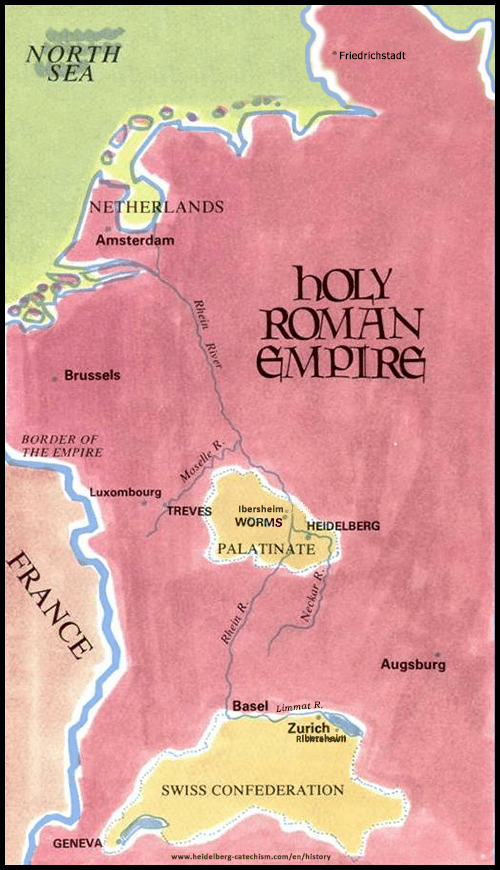
In Zurich Switzerland, in the 1500’s, the issue arose of whether the state should dictate the faith, life and worship of the church or should pastors and laity bring forth the necessary reforms in church life according to their convictions. The city council ordered Conrad Grebel, Manz, Reublin, and Stumpf to stop meeting for Bible study, and also called for the immediate baptism of unbaptized youth as a sign of support and solidarity for the state church. Those refusing were threatened to exile. ”Conrad Grebel decided that he would not only refuse to have his two-week-old daughter baptized as a symbol of his dissatisfaction with the church, but that he himself would be rebaptized as a symbol of making a voluntary choice based on his own free will and of his pledge to a new form of church. In turn, the others at the meeting baptized each other. All of this was done in the full realization that since the time of the Emperor Justinian (A.D. 529), the imperial law code decreed rebaptism a heresy punishable by death. Thus, those rebaptized (“Anabaptists”) were at once legally subject to condemnation and execution.” Without fear, these men travelled throughout Switzerland recruiting new members to their new cause and church in spite of repeated arrests, fines and imprisonment. In 1526 in the Canton of Grisons Conrad Grebel died of the plague.
In November, 1526, the council established the death penalty for participation in the Anabaptist movement. In that year Felix Manz became the first martyr to be killed. Many of the middle class were disturbed by the injustice and objected to being called Anabaptists. “They wanted to be called the “Swiss Brethren” and to be recognized on the merits of their own faith , testimony, and doctrine. Accordingy, in February of 1527, in the Swiss town of Schleitheim, seven articles of faith-the Schleitheim Confession-were drafted primarily by Michael Sattler, a former priest”.”
The Anabaptist movement spread outside of Switzerland to the Netherlands where it was met with swift persecution, but from here came one of its most influential leaders, Menno Simons. He was a student of the Catholic priesthood, but it was merely a means to a satisfactory lifestyle. While living near Leeurwarden, the Dutch capitol of the province of Friesland, he became disturbed by the public execution of Sicke Freerks Snijder, for adult baptism. This was the beginning of a long spiritual journey that would end with his denouncement of the Catholic Church. ”In 1545, Countess Anna of East Friesland distinguished the followers of Simons by calling them “Mennist,” and they were eventually known as Mennonites.”
Wherever the movement spread persecution followed. Finally 18 years after the death of Menno Simmons a period of calm spread over the Netherland communities. After Mennonite churches were established, differences arose regarding those who wanted the old style of plainness and those that regarded them as insignificant. ”Fearing that separation over matters of nonconformity might weaken the church, an eighteen-article agreement was drawn up in the Dutch town of Dort in 1632. Known as the Dordrecht Confession of Faith, this document would both unite and divide Mennonites, and would be retained until the 20th century as their only confession of faith.”
“In an attempt to escape the Anabaptist stigma, many Mennonites heeded the call of Quaker missionaries who had established churches in Holland and along the German Rhine, particularly at Crefeld and Kriegsheim in the Palatinate. They found they had much in common with the Society of Friends: pacifism; the refusal to swear oaths; persecution by the government; and a community based on equality with unprecedented status accorded to women”. At that same time William Penn issued an invitation to his new colony offering them civil and religious toleration.
“Twelve Quaker families and one Mennonite family from Crefeld arrived in Pennsylvania on October 6, 1683, and established a community north of Philadelphia called Germantown. In 1708, the first Mennonite settlement was established by Matthias Van Bebber along the Skippack Creek, fifteen miles northwest of Germantown in what is now Montgomery County. In the following year, Christian Herr settled sixty miles west of Philadelphia in the Pequea and Conestoga Valleys in present-day Lancaster County. Eventually, Mennonites established communities along the
Juniata River in south-central Franklin County and near the headwaters of the Ohio River in Somerset and Westmoreland Counties.”
Coming to America did not end a lot of the hardships the Mennonites were to endure. This was a surprise to me. I was unaware of the difficulties that continued amongst the church and the various groups that settled in Pennsylvania. I would like to continue that story on another page.
My Mennonite ancestors first came on the Virtuous Grace in 1737. Johanne Stauffer/Stouffer, his brother Christian and their mother Veronica emigrated from Germany where they had fled from persecution in Switzerland. Johanne was born in 1715 in Muchenheiser, Palatinate, Wartenberg, Germany. His father Daniel Stauffer/Stouffer was unable to make the trip due to his passing.

Johanne and Christians father Daniel was born in 1666 in Eggiwil, Rothenbach, Canton of Bern, Switzerland my 7th great grandfather.

He died in 1735 in Ibersheim, Rheinland Pfalz, Germany.
More to come…..
 Stauffer Family Genealogy